

Macao SAR Government Portal
News
Consumer Council released its latest November’s ‘Supermarket price survey’ in Sé Parish
Consumer Council conducted its 'Supermarket price survey' for November on 25th November for the implementation of Section 2b), Article 10, Law 4/95/M of 12th June. Surveyed locations included 12 supermarkets in Sé Parish. The latest 'Supermarket Price Survey' is now available on Consumer Council's website (www.consumer.gov.mo), and the 'Supermarket Price Information Platform' iPhone and Android apps. The survey is also available free of charge at the offices of Consumer Council, IACM's Iao Hon and S. Domingos Markets, bookstores and libraries. Consumers may also access the resources through WAP channels on their mobile phones. With reference to the local six parishes and the number of supermarkets in each parish, the Council has divided around 100 supermarkets into 8 areas for price collection. The Council collects prices from these supermarkets for the provision of a more comprehensive database for consumers to check price discrepancies and make price comparisons according to their desired locations. For inquiry, please call 8988 9315.
…
Results of Survey on Manpower Needs and Wages for the 3rd Quarter 2013
The Statistics and Census Service (DSEC) released results of the Survey on Manpower Needs and Wages for the third quarter of 2013. Survey coverage comprises Manufacturing; Hotels & Restaurants; Insurance; Financial Intermediation Activities; Electricity, Gas & Water Supply; Child-care and Elderly Care. This survey excludes the self-employed, as well as insurance agents and brokers not directly employed by insurance companies. At the end of the third quarter of 2013, Manufacturing had 10,779 persons engaged, down by 4.6% year-on-year, of which those working in Manufacture of Food Products (3,627) increased by 454 while those in Manufacture of Wearing Apparel (2,834) decreased by 926. Average earnings (excluding bonuses and allowances) of full-time employees in September rose by 9.8% year-on-year to MOP8,510; sewing machine operators earned an average of MOP4,100. Hotels & Restaurants had 70,928 persons engaged, up by 4.1% year-on-year, with those working in Hotels increasing by 1.7% year-on-year to 45,360. Average earnings of full-time employees in September rose by 6.4% year-on-year to MOP12,240, with waiters/waitresses of Hotels earning MOP8,710 and Housekeeping staff earning MOP7,910; waiters/waitresses of Restaurants earned an average of MOP6,820. Electricity, Gas & Water Supply had 1,104 persons engaged, up by 1.2% year-on-year. Average earnings of full-time employees in September increased by 5.1% year-on-year to MOP25,790. Insurance had 482 persons engaged, up by 5.2% year-on-year. Average earnings of full-time employees in September rose by 5.2% year-on-year to MOP21,760. Financial Intermediation Activities had 396 persons engaged, down by 5.9% year-on-year. Average earnings of full-time employees in September increased by 6.5% year-on-year to MOP13,350. Child-care and Elderly Care had 894 and 643 persons engaged respectively. Average earnings of full-time employees in September amounted to MOP10,700 and MOP10,590 respectively. At the end of the third quarter of 2013, vacancies in Restaurants increased by 369 year-on-year, while those in Hotels and Manufacturing decreased by 467 and 316 respectively. In terms of recruitment prerequisites, all vacant posts in Insurance required working experience. As regards educational attainment, 73.3% of the vacancies in Restaurants required junior secondary education or lower, while 90.0% of those in Insurance required tertiary education. Besides Cantonese, all vacant posts in Insurance and Financial Intermediation Activities required knowledge of Mandarin, while 90.0% of those in Insurance required English. Meanwhile, 79.3% and 63.0% of the vacancies in Hotels required knowledge of Mandarin and English respectively. In the third quarter of 2013, Restaurants had the highest vacancy rate (10.6%), while the employee turnover rate (7.0%) edged up by 0.2 percentage points year-on-year; the vacancy rate in Manufacturing reached 9.3% and the employee turnover rate rose notably by 8.5 percentage points to 16.1%, indicating that most of the vacancies are not filled and that the turnover of employee has not improved in these industries.
…
MGTO organizes industry training for quality upgrade Nearly 100 courses and seminars held
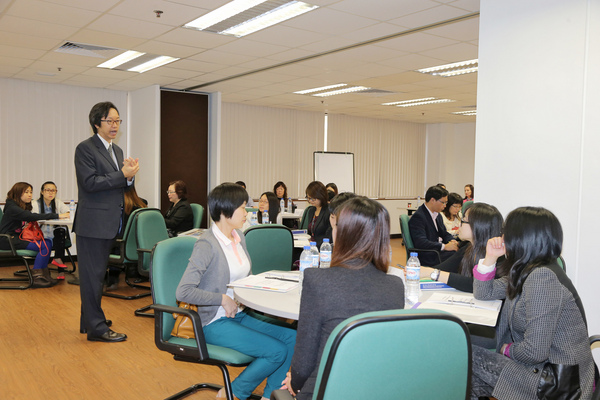
In response to the boom of Macau travel industry and diverse customer demand, Macau Government Tourist Office (MGTO) regularly organizes professional training for specific fields in the industry to upgrade service quality and efficiency across the sector in order to promote quality tourism. As a result, over 90 courses and seminars were held from January to November this year. This year MGTO is dedicated to optimizing industry management and training as well as actively promoting quality tourism as one of its main working goals. The Office has also explored the industry's specific needs for training together with related trade associations and from January to November organized a total of 93 training courses and seminars in different style, which won active participation and support among industry partners. 4,584 attendees seized the training opportunities. The profession categories under training include travel agency supervisors, tour guides, employees in the retail and catering industry as well as tourism department personnel of Portuguese-speaking countries, etc. MGTO works closely with industry partners and training institutes to organize different kinds of training activities to meet specific training demand in the sector. Through such measure, the Office strives to promote and coordinate professional and technical training opportunities for the tourism industry so as to enhance overall service quality and efficiency in the industry. Furthermore, the Office continues to help build Macau into a quality tourist city in accord with the destination's development strategy as a World Centre of Tourism and Leisure. MGTO organizes the four-day "Effective Travel Agency Supervisory Management Workshop" on 25, 29 November and 2, 6 December as well as two sessions of the two-day workshop named "Technique in Handling Dissatisfied Customer for Tour Guides" on 28 – 29 November. Instructors of the Institute for Tourism Studies (IFT), a lecturer of the Hong Kong Polytechnic University and the Chairman of the Hong Kong Association of Registered Tour Co-ordinators (HARTCO) are invited to supervise the aforementioned workshops. Other training activities and seminars for the catering industry will also be held in December.
…
MICE Statistics for the 3rd Quarter 2013
Information from the Statistics and Census Service (DSEC) indicated that a total of 218 MICE events were held in the third quarter of 2013, down by 5 year-on-year. The average duration stood at 2.0 days, bringing a total of 623,000 participants and attendees; the floor area used totalled 142,000 m2. There were 197 meetings and conferences held in the third quarter of 2013. Number of participants surged by 92% year-on-year to 30,000 on account of an increase in number of Conferences and participants of Corporate Meetings. Concurrently, 21 exhibitions were organized, and the total floor area used was 57,000 m2; number of exhibition attendees totalled 593,000. In accordance with the information from organizers of 21 exhibitions, 13 exhibitions were repeated events, engaging 367 full-time workers. Number of exhibitors was 2,280, with the majority coming from Macao (39%) and Mainland China (26%); professional visitors totalled 38,482, and 64% were from Macao. In the third quarter of 2013, Revenue (MOP19.15 million) and Expenditure (MOP39.15 million) of the exhibition organizers decreased notably by 57% and 40% year-on-year, due to the absence of some exhibitions that were held in the same quarter of 2012. Revenue came from financial support granted by government & other organisations (51%) and rental of exhibition booth (49%). As regards expenditure, production, construction & decoration services and publicity & public relation accounted for 31% and 27% of the total respectively. In addition, information from 220 exhibitors indicated that sales of products took up 95% of the revenue while rental of exhibition booth shared 78% of the expenditure. There were 676 MICE events held in the first three quarters of 2013, down by 52 year-on-year. Total number of participants and attendees increased by 5% year-on-year to 1,045,000. A total of 42 exhibitions were held in the first three quarters of 2013; number of attendees increased by 7% year-on-year to 962,000.
…
“Secure Electronic Postal Box – SEPBox” of Macao Post The first round lucky draw and prize presentation ceremony
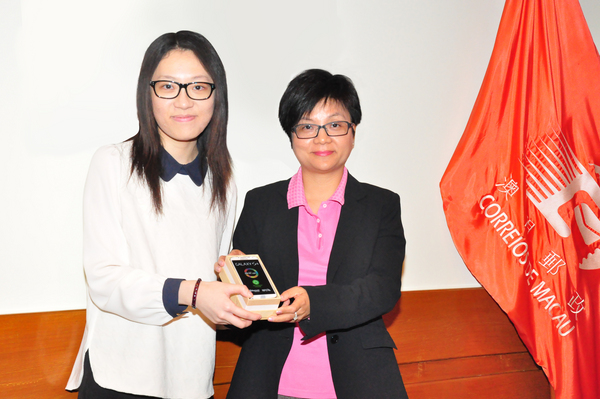
Macao Post has launched the "Secure Electronic Postal Box – SEPBox" on 8th October 2013. Macao SAR residents, associations, business corporations and public entities are free to register and activate their SEPBox for receiving Postal Registered Electronic Mails, Postal Electronic Mails and eDirect Mails. From 8th October 2013 to 31st March 2014, Macao Post will hold six rounds of lucky draws for the users who registered and activated their SEPBox successfully. The first round lucky draw winner is Ms. Chiang I Man who has received a brand new Samsung Galaxy S4 Smartphone and the prize presentation was conducted on 22 November 2013. With success registration and activation of SEPBox on or before 31st March 2014, users are automatically eligible for the monthly lucky draw and have the chance to win a brand new Smartphone. Registration of SEPBox can be conducted through web or mobile applications. There are still five lucky draws, the earlier you register and activate, the greater chances of winning. To get more information about SEPBox and lucky draw, please visit our website http://seps.macaupost.gov.mo. For enquiry, please contact us at Tel: 28720029 or email us at: support@seps.macaupost.gov.mo.
…
CE meets with President of European Commission
The Chief Executive Mr Chui Sai On met today with the visiting President of the European Commission, Mr José Manuel Durão Barroso, at the Santa Sancha where they reviewed the co-operation between Macao and the EU and exchanged views on increasing and expanding co-operation on air services, creative industries, education, and environmental protection industries.
Mr Chui welcomed Mr Durão Barroso and his delegation once again for having visited Macao, and expressed his gratitude's to the President for the EU support for Macao over the years. The EU and Macao have established a good and solid foundation for co-operation and he expected this to have more optimistic broad prospects for co-operation in the future, he said. Mr Durão Barroso agreed that co-operation between the EU and Macao has attained ideal results in the past 20 years. The aviation agreement signed today symbolised both sides would have better and more partnerships.
He said the EU and China were important partners, and because of Macao's uniqueness and the successful implementation of the "one country, two systems" principle, Macao plays an important role in the process of sustainable development of relations between the EU and China. The President showed interest in Macao's future strategies in economic and social development, and the challenges ahead. He said he was glad to see an encouraging growth in economic and tourism development in recent years. The EU would be willing to strengthen co-operation with Macao on legal, education, culture, environmental protection, personnel exchanges and other aspects, and that both sides would have mutual benefits, he said.
Mr Chui updated Mr Durão Barroso on the latest developments in Macao and said the Government had made good use of the supportive policies from the Central Government on accelerating regional co-operation with brotherhood provinces, co-operating with Guangdong on the opening up Hengqin and Nansha, promoting in many ways economic diversity, the growth of creative industries, exhibition industries and traditional Chinese medicine industries. On tourism development plans, the Government would actively inject non-gaming element into the policy. Meanwhile, the new campus of the University of Macao has been inaugurated recently, which would help cultivate more talents for the sustainable development of Macao, Mr Chui added.
Also present in the meeting were the Commissioner of the Ministry of Foreign Affairs in Macao, Mr Hu Zhengyue; the Head of Office of the European Union (EU) to Hong Kong and Macao, Mr Vincent Piket; the EU Ambassador to China, Mr Markus Ederer; member of the President's cabinet, the Secretary for Administration and Justice, Ms Florinda Chan; the Secretary for Economy and Finance, Mr Tam Pak Yuen; the Chief of the Office of the Chief Executive, Mr Tam Chon Weng; the Director of the Macao Economic and Trade Office to the World Trade Organization, Mr Raimundo Arrais do Rosário; and the Director of the Protocol, Public Relations and External Affairs Office, Mr Fung Sio Weng.
…
Macao SAR and EU signed Horizontal Agreement on air services, which increases the number of airlines eligible for designation to Macao
The Macao Special Administration Region (SAR) and the European Union (EU) signed the "Agreement between the Government of the Macao Special Administrative Region of the People's Republic of China and the European Union on certain aspects of air services" (commonly known as the Horizontal Agreement) today (23 November 2013). With this Agreement, the number of airlines that an EU Member State may consider eligible for designation to Macao increases. The signing ceremony, which was convened at the conference facilities of the Macau Tower at 12:00noon, was presided by the Chief Executive of the Macao SAR and the President of the European Commission, Mr. José Manuel Durão Barroso. The signatories were the Secretary for Transport and Public Works, Mr. Lau Si Io and the Head of the EU Office to Hong Kong and Macao, Mr. Vincent Piket. In November 2002, the Court of Justice of the EU ruled that every Member State is required to grant equal market access for routes to destinations outside the EU to any EU carrier with an establishment in its territory, in order to truly reflect the virtues of non-discrimination and fairness. Consequently, the Air Services Agreements (ASAs) between EU Member States and third parties must either be amended separately, or through the negotiation of single "horizontal" agreements with the EU acting on a mandate from Member States, to reflect this legal requirement. The negotiation of the Horizontal Agreement between Macao SAR and the EU was carried out by the Civil Aviation Authority of Macao SAR and the EU Council Secretariat since 2004. Today, the Macao SAR Government and the EU took the opportunity of the commemoration of the 20th anniversary of the Macao – EU trade cooperation to sign the Agreement in Macao. From now on, by virtue of the principles of non-discrimination and the freedom of establishment, the same rights to all EU airlines are guaranteed, meaning that the number of airlines which an EU Member State may consider eligible for designation to Macao will increase.
…
EU and Macao will further boost bilateral co-operation
Macao and the European Union will continue to co-operate in many areas ranging from culture to education programmes, and in new areas from air service to creative industries and in combating human trafficking. Chief Executive Mr Chui Sai On said this today at the opening of 20th anniversary celebration of the EU-Macao Trade and Cooperation Agreement, which was also attended by the President of the European Commission, Mr José Manuel Durão Barroso. Mr Chui said the Agreement, signed before the handover in 1992 and implemented in 1993, had fostered closer ties and provided co-operation in various fields ranging from trade to culture between Macao and the EU. After the handover, the Macao Special Administrative Region (MSAR) Government has been working together with the EU in enhancing and further promoting bilateral co-operation. This resulted in the rapid growth in bilateral trade and collaboration initiatives, he said. This trade continued to record positive growth in the first three quarters of 2013, making the EU the second largest trading partner of Macao. On co-operation, the recent 18th Joint Committee Meeting held on 15 November would certainly attest to the ongoing fruitful co-operation between Europe and Macao. Mr Chui said the annual high-level dialogue on trade and co-operation under the Joint Committee framework would play an active role in further developing the long-standing sustainable strategic partnership between Macao and the EU. The EU president, who was in Macao for the day, said at the celebration that Europe's relations with Macao was drawn on deep historic and cultural roots based on common values and a wide range of shared interests. He stressed that the EU strongly supported the "one country, two systems" principle and in particular the respect for human rights and individual freedom enshrined in the Basic Law, which should be enjoyed by the citizens. Since the signing of the Agreement, trade relations have been growing steadily and smoothly, with record volumes year after year, to 511 million Euros in 2012. For Macao, the EU is now the second largest source of imports after the Mainland and its fourth largest export market, Mr Durão Barroso said. He said the EU still needed to further strengthen this very productive relationship and fully exploit all the potentials for greater mutual investment, trade, co-operation and growth. He said it was without doubt that Macao is a key hub between Asia and Europe; Macao's strong tourism industry has further pushed economic diversification. All this meant there was room to work even more closer together to better translate the common interest in common actions and successfully confront new challenges. Mr Durão Barroso said the bilateral comprehensive relationship also aims to foster mutual understanding, stimulate exchange of ideas, and strengthen links between peoples so that both sides would benefit from the respective cultural diversity. The bilateral co-operation on training of interpreters and translators and the EU Academic Programme would further promote educational and cultural exchanges for the younger generation, he said. On legal co-operation, both sides have worked together in this area ever since 2002, under two successive phases of the EU-Macao Legal Cooperation Programme. This programme has been successful in allowing a very concrete hands-on exchange of legal experience in areas of priority to the Macao Government. For this reason, the EU and Macao were keen to continue this co-operation in the years to come, said Mr Durão Barroso. During the celebration, Mr Chui and Mr Durão Barroso also witnessed their representatives sign the "Agreement between the Government of the Macao Special Administrative Region of the People's Republic of China and the European Union on certain aspects of air services". This agreement, commonly referred to as the "Horizontal Agreement", is an international agreement negotiated by the European Commission on behalf of EU Member States, to bring all existing bilateral Air Services Agreements between EU Member States and a third party in line with the EU law. A set of commemorative stamps themed "20th Anniversary of the Macao-European Union Agreement for Trade and Co-operation" was also launched to celebrate the occasion. After the celebration, Mr Durão Barroso was scheduled to meet with Mr Chui at the Santa Sancha. He will also attend the Inauguration Ceremony of EU-Macao Chamber of Commerce based in Macao and the dinner reception jointly hosted by the EU Head of Office and Consul General of Portugal before departing in the evening. Official relations between Macao and the EU have been steadily built on the foundation of the Macao-EU Trade and Co-operation Agreement signed in 1992. Under this agreement, Macao and the EU may co-operate in industry, investment, science and technology, energy, information, training and other areas. A Joint Committee established by both parties hold an annual meeting to review the implementation of the agreement and discuss its future development, with the venue alternating between Macao and Brussels.
…
MGTO holds Tourism Law seminars for travel trade
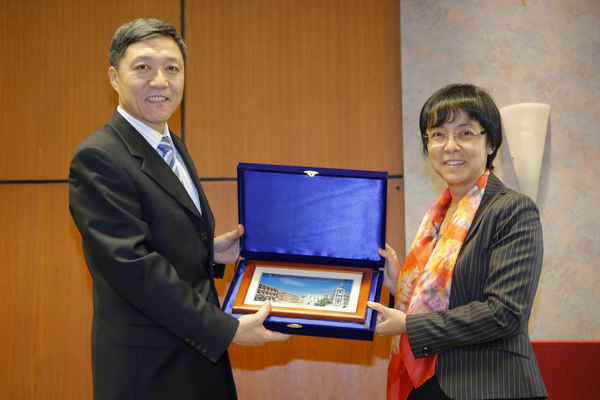
Macau Government Tourist Office (MGTO) invited a policy and legal expert from China National Tourism Administration (CNTA) again to present two explanatory seminars in Macau and elaborate the legal content of the "Tourism Law of the People's Republic of China" specifically for tour guides and travel agencies. As the "Tourism Law of the People's Republic of China" has come into force in Mainland China since 1 October 2013, MGTO invited Director General of the Policy and Legal Department of CNTA, Liu Xiao Jun to come to Macau today (22 November) and address local tour guides and travel agencies about the "Tourism Law of the People's Republic of China" in two trade seminars. MGTO Director Maria Helena de Senna Fernandes attended the seminars as well. During the explanatory sessions, Liu Xiao Jun elaborated on some widely-concerned clauses in the Tourism Law. He also took time to respond to various issues encountered or concerned by Macau trade after the Tourism Law took effect. MGTO previously invited another policy and legal expert from CNTA in July to address two seminars in Macau and introduce the main points of the Tourism Law for related officials and travel trade in town. With the Tourism Law in force, MGTO also sent official letters to the trade for circulation, reminding them to ensure their itinerary details coincides with the content of the contract signed between Macau's ground receiving agents and Mainland China's tour operators organizing tours for Mainland residents to Macau during their itinerary planning for Mainland tour group visit to Macau; the Office also urged the trade to carry out the content of their itinerary program exactly when they tend on the visitors. With regard to Mainland tour groups to Macau, MGTO has received four assistance enquiries; a case about dispute between a Mainland tour-group leader and members along with one complaint from tour group members about waiting for too long since the Tourism Law took effect in the Mainland on 1 October until 21 November.
…
IFT Hosts Master, Affection, Painting – Exhibition of Che In Lei
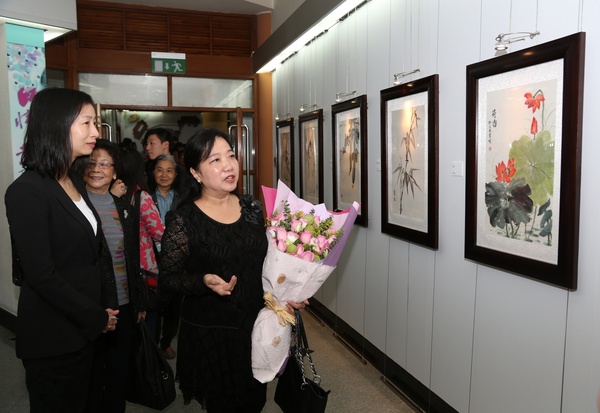
To promote development of local creative industry, Institute for Tourism Studies (IFT) hosts the opening ceremony of Master, Affection, Painting – Exhibition of Che In Lei on the 22 November. From 22 November 2013 to 15 March 2014 at IFT Educational Restaurant and Team Building, the exhibition showcases the Chinese ink paintings of the instructor Ms. Che In Lei and her students. Interested parties are welcome to come to pay a visit. IFT invited the renowned Chinese ink painting master, Ms. Che In Lei to teach its newly-opened Chinese Ink Painting course, which has commenced in November 2013. The Chinese Ink Painting course offered by IFT focuses on not only the painting techniques, but also personal quality and self-cultivation, as well as nurturing talents through delving into the essence of the traditional culture. In the class, students created unique Chinese ink paintings with freehand brushwork and their impression of arts. The Exhibition showcases 18 recent Chinese ink paintings of Ms. Che In Lei and her students, featuring plum blossom, orchid, bamboo, chrysanthemum, flowers, birds, mountains, rivers, etc..The works demonstrates the elegancy and upright of Chinese ink painting and ties of friendly apprenticeship and inheritance between Ms. Che In Lei and her students, in order to promote the traditional arts of Chinese ink painting to the public. To cope with Macao SAR Government's policy to develop and promote creative industry, IFT started to offer short and fundamental courses in this area in the recent years. During the years, IFT has continuously explored courses which are up-to-date, interesting and practical for the community. Today, courses in the areas of graphic design, advertising design, painting, photography, multimedia creative design, video production, souvenir production, floral design, leather craft and many others in various levels and areas are running at IFT. Regarding graphic design courses, Corporate Identity Design, Diploma in Advertising Design, Poster Design courses are offered, while photography courses are even subdivided into varied courses including commercial photography, creative photography, fine art photography, reportage photography and salon photography. In souvenir production we are offering silver clay, model production, mosaic, felt, paper artwork, accessories, etc. Recently, the Institute has launched two creative arts courses including leather craft, and DIY recycle design series – floral production and stationery production, receiving positive response among the public. To further develop the career of creative industry talents in Macao, IFT is providing learning opportunities for them. Concerning the lacking creative art administrative management talents in Macao, IFT has been running an Art Administration programme for the third year and has invited renowned overseas professors to deliver lectures and teach courses at IFT. Local culture and arts associations and industry talents are welcome to enroll in the course, in order to better the atmosphere of culture and arts development of Macao. IFT will continue to offer more diversified cultural and creative courses to the public and interested parties in the future.
…